Guided psychedelic therapy
Nine Perfect StrangersGuided psychedelic therapy is Tranquillum House’s progression from covertly adding small doses of drugs to guests’ smoothies to an unprecedented, high-dose psychedelic session presented as a transformative treatment. Masha frames the experience as therapeutic and medically managed; the guests’ varied visions and disclosures give it emotional force, while the manner in which the drugs are administered makes consent and control central to its meaning.
From micro-dosing to a new protocol
Masha describes micro-dosing as a way to raise creativity, focus, spiritual awareness, and relationship skills, with each dose around one-tenth of a normal LSD dose. She says it has helped guests concentrate during meditation and yoga and eased withdrawal symptoms from substances they have stopped consuming, including alcohol and sugar. At first, guests attribute feeling better to organic food and meditation: staff have been putting micro-doses in their smoothies for more than a year without their knowledge, and some guests rebook because they want to recapture that improved feeling.
That practice changes when Masha decides that micro-dosing is not enough. She wants to do something revolutionary and push the envelope, telling the staff the work could change history. Yao argues that he wants to help people, not alter history, but his position shifts after he takes the psychedelic therapy himself with Masha as his guide. Delilah later sees him citing research with new intensity; in her view, it is the drugs and Masha’s influence, rather than the research, that have changed his mind. She also tries the therapy, finds the experience powerful, but regards the revelations and feelings it produces as drug-manufactured rather than inherently true.
The guests learn what they have taken
The disclosure comes as the retreat’s period of noble silence ends. After five days without conversation, Masha invites the guests to reintroduce speech and eye contact. The shift from silence to an explanation of drug use places the announcement inside a carefully staged group ritual, but not one the guests have agreed to join. Lars recognizes that the revelation is extraordinary even by the standards of his previous health-resort experiences; he had come partly hoping to reduce recreational drug use, and he has never tried LSD.
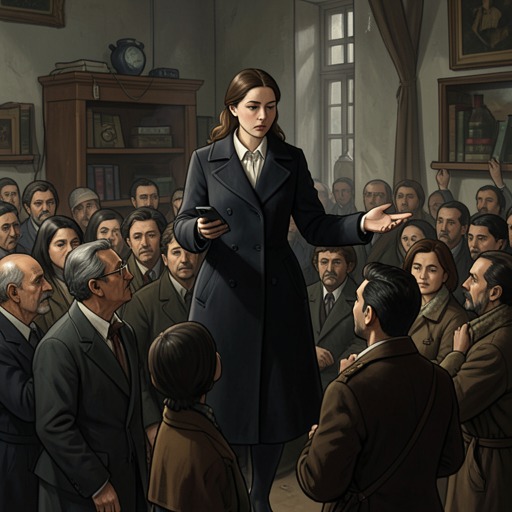
Masha calls the practice micro-dosing and cites claimed benefits and university research. Heather challenges the framing: the effects of the latest smoothie, she observes, seem to exceed a micro-dose. Masha confirms that the guests are about to undertake a new protocol, the first of its kind at Tranquillum House and offered to these nine guests as an extraordinary opportunity. She reveals that most guests’ final smoothie contained both LSD and liquid psilocybin, a naturally occurring substance in certain mushrooms. Masha calls what follows guided psychedelic therapy, promising that the dissolution of the ego will open access to a higher consciousness and a new view of the world.
The formula is not the same for everyone. Ben and Jessica had come for couples counselling, and Masha says their smoothies contained a different combination: MDMA, which she claims was selected for its potential use in couples therapy. Heather bluntly calls it ecstasy and objects to the risks. When Ben offers to leave, Jessica does not take his hand, leaving the couple’s response unsettled at the moment of disclosure. Masha argues that MDMA can promote empathy and openness and cites its trials for PTSD, social anxiety, and couples therapy. Heather counters that Tranquillum House is not a clinical setting. The exchange makes the central conflict plain: Masha speaks in the language of controlled treatment, while the guests have not been asked to consent to the drugs or the terms she has set.
Experience, interpretation, and the promise of safety
Masha justifies the session through the idea of set and setting: she says a positive experience requires the right mindset and a controlled environment, and points to herself, Yao, and Delilah as trained guides there to keep the guests safe. Her assurance does not erase the guests’ alarm. Napoleon says that he has felt he lost his mind and did not like losing it; Heather warns Masha that she will be sued. Masha nevertheless directs guests toward stretchers, assuring them that a transcendent experience awaits. Her confidence in the setting is therefore also a claim to authority over an experience the guests did not knowingly choose.
The altered state can feel less like an abstract lesson than a sudden rearrangement of perception. For Lars, a thought about Ray—that Ray does not want anything from him beyond his love—briefly seems to contain the answer to every question before his mind breaks into a vision of a billion purple petals. The sequence gives the therapy a genuine emotional intensity without proving that its revelations are objective truths. Its force lies in the collision between an intimate insight and the chemically induced state in which it arrives.
Frances later recalls a vivid, beautiful dream-like experience in which Gillian, her father, and her former husbands appeared amid symbols and visual metaphors. Yao, Delilah, and sometimes Masha interrupted with questions and attempts to guide her; Frances ignored them, absorbed in the experience, until they apparently stopped trying to steer it. She remembers being in space and being an ant. On waking, she feels clear and bright and looks forward to interpreting the images. Her account preserves both the session’s imaginative richness and the staff’s effort to direct it: the experience is personally meaningful, but it also unfolds under active guidance.
For Zoe, the experience brings her dead twin brother, Zach, into an imagined family scene. She later says that she had been angry with him and unable to forgive what felt like an act meant to make her feel bad forever; during the session, it felt as if they had talked again. Frances describes a similarly vivid encounter with her dead friend Gillian and her father, and Zoe wonders whether they might really have seen the people who appeared to them. The narrative records these experiences as emotionally consequential, not as evidence that the visions were literal. For the Marconi family, the session also briefly restores the imagined feeling of all four of them together: when Zoe jokes that Zach would find the group experience hilarious, Napoleon answers that Zach is there, and the family appears whole to him.
Secrecy, control, and aftermath
The staff’s later account makes clear that the guests’ ignorance is not incidental. For over a year, smoothies were dosed without the guests’ knowledge or ill effects, and guests credited their improved feelings to the resort’s food and meditation. The larger session is a deliberate escalation from that concealed practice. Delilah recalls that she had suspected the plan would end badly from the moment Masha gave her a book on psychedelic therapy and said it would revolutionize the business. When the guests are later confined, Yao and Delilah begin suggesting that they should be let out or given a clue. Masha insists that the confinement is essential to their rebirth and compares their struggle to a baby squeezing through the birth canal. The same logic that casts drug-taking as transformation thus extends to a controlled ordeal whose participants are denied a clear way out.
The retreat does not settle whether drug-induced visions reveal truths or only make feelings seem unusually vivid. Lars’s recognition of his love for Ray, Frances’s encounters with the dead, and Zoe’s felt reconciliation with Zach all matter to the people who experience them; Delilah’s skepticism, Napoleon’s fear, and Heather’s objections resist treating intensity as proof of therapeutic success. After the ordeal, the group finds phones and contraband wine, eats, drinks, dances, and cries together. That return to ordinary company offers a communal release, but it cannot retroactively supply informed consent. The therapy’s decisive significance lies in that tension: Tranquillum House promises transformation through carefully managed experience while withholding from its guests the knowledge and choice that would make the experience theirs.